 You remember the speech because you got it too. You can be anything you want. An astronaut. An artist. President, probably. It was said with love, and we believed it — we were the gold-star generation, raised on limitless. Then adulthood arrived with the half of the speech nobody had written down: anything doesn't pay in anything. It pays in rent, loans, premiums, and groceries. We each found that out alone — some of us in 2008, some in a studio apartment with a degree that was supposed to be a calling, all of us eventually.
This is not a bitterness essay. The adults who said it to us weren't lying; they were loving us with incomplete information. They described a destination and never mentioned a vehicle. But here is the part worth catching before it happens in your own house: the same speech is now being read to our kids, lightly reworded. It's called follow your passion.
Same speech, second verse
"Follow your passion" is "you can be anything" with a compass glued to it, and it inherits both flaws. The first is direction: it assumes passion is lying around, fully formed, waiting to be found before the work starts. Nearly every honest biography runs the other way — passion tends to follow mastery. People fall in love with what they get good at: competence buys autonomy, autonomy produces meaning, and one day the result gets called a passion. Telling a nineteen-year-old to find the feeling before doing the work is telling them to harvest before planting.
The second flaw is the license it grants: keep every option open until the right feeling arrives. We ran that experiment on ourselves. Keeping options open feels free, and it is the most expensive subscription a twenty-something can carry.
We know the price. We paid it.
The searching years are almost always the non-saving, non-investing years — and as N° 01 shows, those are precisely the years the machine pays most for. The same $200 a month started at eighteen instead of twenty-five is worth roughly $540,000 more at the end. Nobody priced the finding-yourself decade for us. We can price it for our kids — not to cancel it, but so it gets chosen with open eyes instead of drifted into.
And the cost wasn't only money. A life is about four thousand weeks, and nothing meaningful gets built outside a commitment that closes doors. The perpetual searcher isn't keeping their options open; they're declining all of them, one deferral at a time. What we admire in anyone — the craft, the taste, the sureness — was built inside something they stayed with. That part of the speech was missing too.
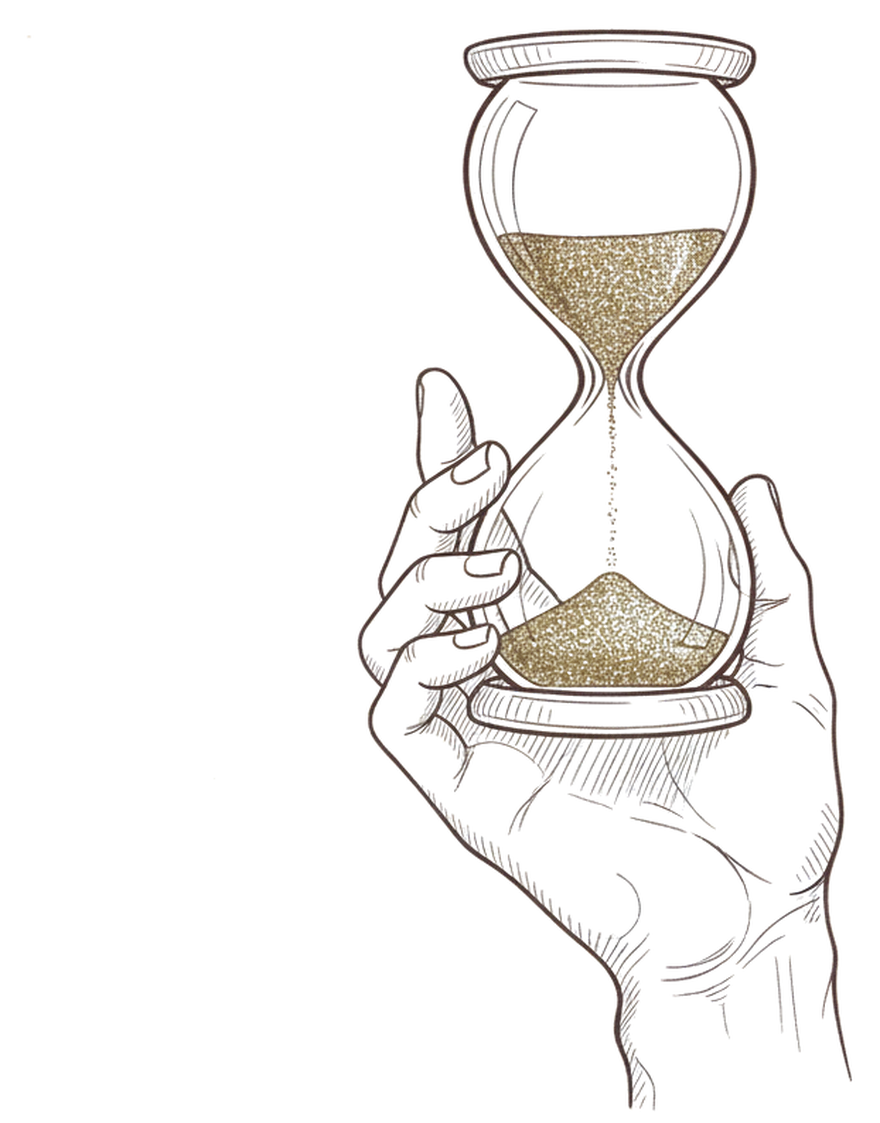
The sentence that was missing
The correction is not the opposite speech. Some of us have started giving our kids the reverse — be practical, pick something safe, dreams don't pay — and that version fails in its own quieter way. Nobody needs a childhood run by an actuary.
The complete version keeps both halves: you can build a life you love — and here is how you'll pay for it. Swap passion for curiosity: it's cheaper to follow, asks for an afternoon instead of an identity, and compounds into skill — which is where passion was hiding the whole time. Commit to things long enough for the compounding to show up. And automate the money early, so the dream years are funded instead of fatal. The artist with an index fund running quietly in the background gets to stay an artist.
Money is the tool. Happiness is the point. The speech we grew up on only had the point. The fix isn't to hand our kids only the tool — it's to finally say both sentences out loud, to the same kid, at the same time.
This is a snippet of one session. The course is twenty-four of them, live — then a lifetime to let it compound.
Join the waitlist